Stitches in Time ~ Sandy Harris of Callie Quilts, in conversation with Evolution
We have always used our linen offcuts with intention. Strips repurposed, remnants rehomed, nothing wasted if we can help it. But quilts, the kind that take real time, carry genuine craft, and become heirlooms rather than accessories, had always been a dream we had not yet found the right way into.
"Amanda’s love of creating and observing the process of making patchwork quilts was inspired by her mother, Isabella. Amanda had to place colours together in similar tones. Liberty and Sanderson prints, her mom's beautiful threadbare clothing and shweshwe was combined to create quilts in the 1970’s."
Then we found Sandy.
Sandy Harris is the founder of Callie Quilts, a Cape Town-based studio where quilting is practiced as both art form and legacy. Each piece is designed, stitched, and finished by hand, in small batches or as singular one-off works. When we saw what she was making, we knew immediately that our linen offcuts had found their highest purpose.
What began as a collaboration has grown into something we did not fully anticipate. Inspired by Sandy's craft, her generosity, and the tradition she so beautifully upholds, Evolution will be taking the next step, developing our own in-house quilting process, with Sandy's blessing. It is a natural evolution of everything this collaboration has taught us, and a commitment to honouring the tradition with the same care and respect it deserves.
But first, we wanted you to meet the woman who started it all.

Sandy Harris with her own creations.
Sandy, tell us a little about yourself and how Callie came to be.
My background is in Fine Art and textiles and I have always spent a large portion of my time in studio constructing form from fabric. Sewing has never been just a hobby for me – it’s been a means to express myself and ground myself and I have built a life around it as a central pillar. I made my first quilt during an artist residency in Norway, where I spent two months in a small fjord-side town exploring the landscape’s influence on my practice. There, a woman welcomed me into her home and shared her quilt collection, opening up a new dimension of the art–craft intersection I’d long been drawn to. But it was only in 2024 that the idea of Callie came to me, and it also coincided with the making of a quilt.
Quilting carries a long and meaningful history, passed between generations, stitched through communities. What does that heritage mean to you personally, and how does it shape the way you work?
It means everything to me! Quilting, like most craft, is intrinsically linked to community. Just like my first experience with quilting, it is a skill that is passed on, taught though care and never rushed. As a woman, I feel connected to the many women that have come before me and shared their time and space so that I can have the knowledge I now have. These days, a lot of this sharing happens online and there are countless communities built around sharing knowledge and celebrating each other, but when these communities are able to get together in person is when the real magic happens.
A defining factor in Callie is to center community in every decision that I make. This not only means sharing knowledge, but caring for those who make Callie possible through fair and decent wages, and encouraging people to make their own quilts even if that means they won’t buy one of mine.

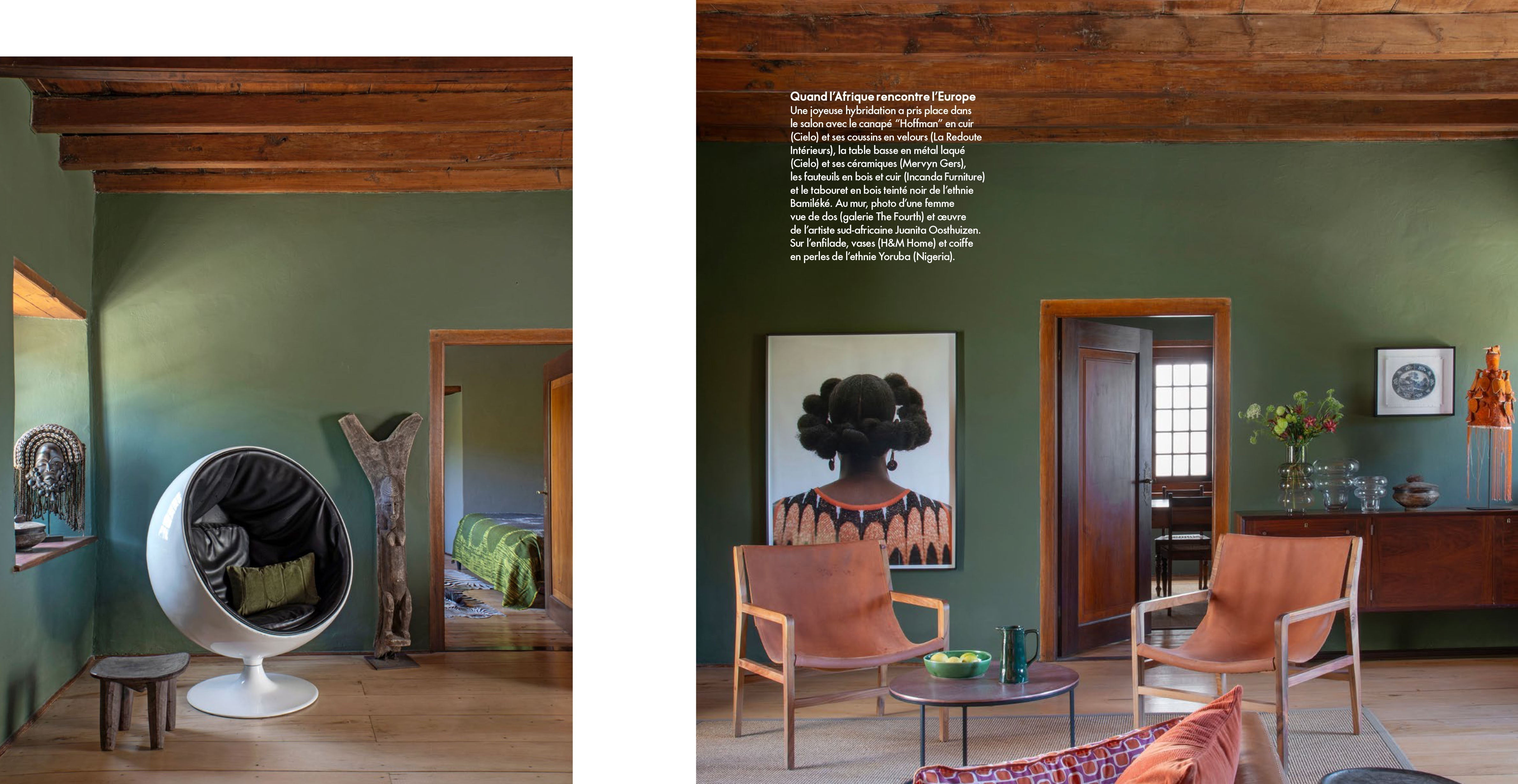
Left: Evolution and Callie Quilt featured in House and Leisure. Right: Linen details.
Every Callie quilt is made by hand, in small batches or as a completely one-off piece. Can you walk us through what that process looks like from the very beginning?
Sure! Every quilt starts on the cutting table. I use a rotary cutter and metal ruler to cut strips out of each of the chosen colours. I then cut the batting to size, which sometimes involves joining two pieces if I’m making a larger quilt. It is then time to begin the sewing process. To do this, I most often use a combination of two methods – Quilt-As-You-Go, and my take on the Log Cabin method.
The Quilt-As-You-Go method means that you sew each piece directly into the batting, rather than sewing the front and back pieces separately and then quilting them together with the batting in the centre. The Log-Cabin technique involves starting with a centre piece and working your way outwards. My signature quilts are made up entirely of the same technique over and over – place two pieces on either side of the first centre strip, sew, press, then turn it 45 degrees and place two strips on either side of the short edges… and repeat. It’s the most satisfying feeling seeing the design emerge and grow as I work.
Once I get to the edge of the batting I add the backing, which usually involves a lot of patience and a lot of pins, followed by tacks to keep everything in place. I then sew the binding on the edge and finally close the binding by hand, a process that is very time consuming but far superior to a machine bind, as it creates a beautiful clean and neat edge.
Your mom, Carolyn, now works alongside you in production. How did that come about, and what does it mean to have her beside you in the studio?
My mom was the first person I told about the idea for Callie. I knew immediately that if I was going to do this I would need her at my side. The name Callie comes from her – it is her family nickname – and it felt appropriate that I name my business after the person who made it all possible. To have her working with me feels both completely natural and incredibly special – something that I cherish and am forever grateful for.


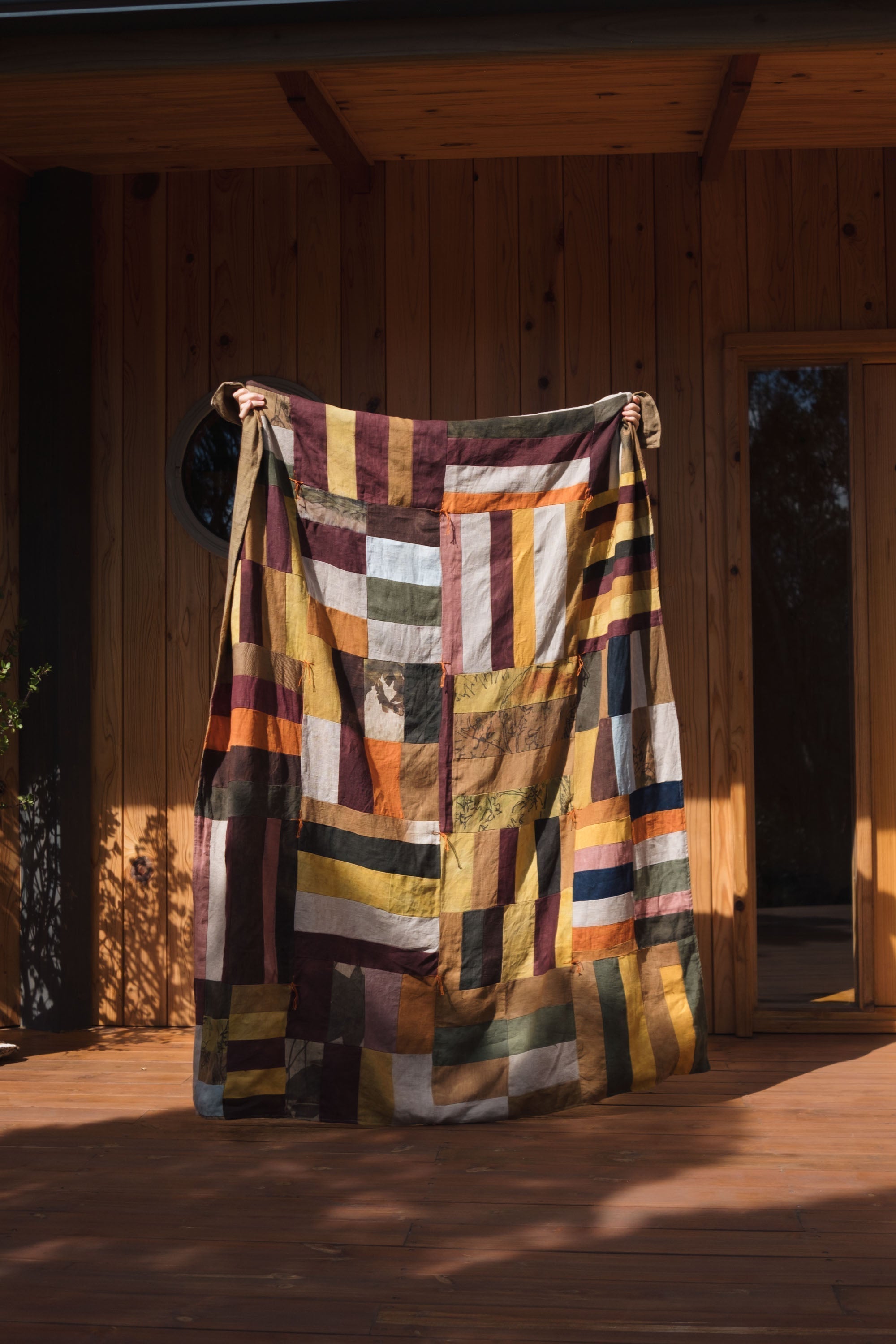
Evolution and Callie Quilt Collaboration.
How did the collaboration with Evolution come about, and what was your first impression of working with their linen offcuts?
Amanda got in touch with me after I had a stand at Decorex, I think it was. I had been approached by a number of people to do collaborations, but this one felt right and I felt ready. I loved how Amanda described what they do and their ethos behind textiles and production. Receiving the big bag of fabric offcuts was very exciting! I love love love linen – it is such a special, versatile, strong material, and opening up the parcel felt like my birthday. The colours were so different to what I had been working with and I was very excited to see how I could use them to make quilts that shared or even created a new visual language between Callie and Evolution.
Our fabrics arrive with their own history, pattern, texture, the story of where they came from. How do you approach the design of each quilt? Does the fabric lead you, or do you lead the fabric?
Quilting has an incredibly vast history of using fabrics that had a life before them, so this felt very appropriate to me. Linen like this is not commonly used in quilts, but any quiltmaker will tell you that there are no limitations when it comes to quilt making. For these designs I had a few constraints since the fabric was pre-cut into strips of all different lengths and thicknesses, but these constraints are also what form the basis of the design. I wanted to best utilize the fabric that I had without creating more waste and without adding more fabric. Each quilt is quite different, and I think this shows how fabric can lead a design but you can take that wherever you want to take it.

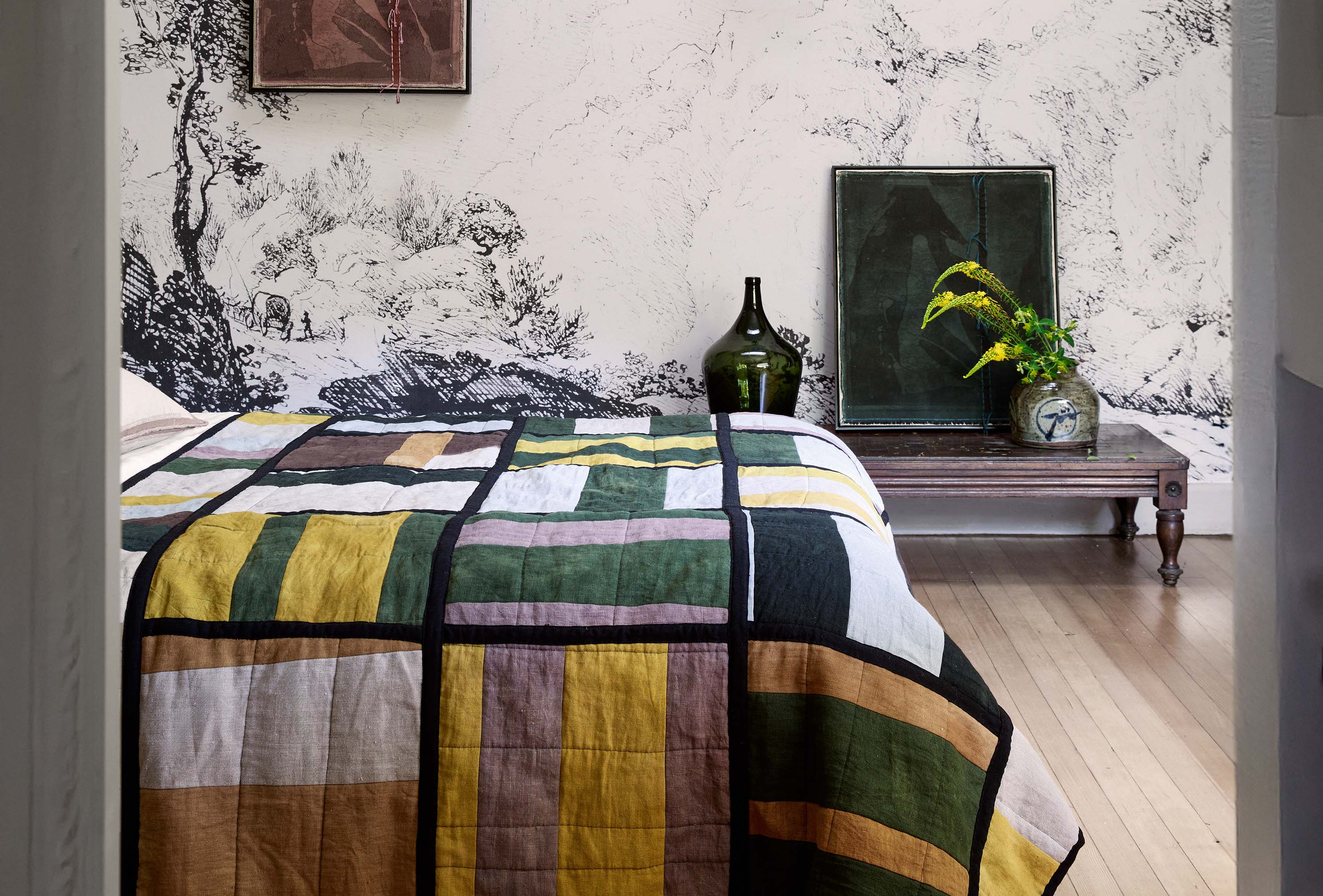
Callie Quilts.
With only four to five quilts completed per year, each one is a genuinely limited piece. Is that a deliberate decision, and what do you want people to understand about what that means?
Yes, this is absolutely deliberate. I want my business to work for me, not for me to work for my business. So many people who turn what they love into a business end up losing their passion and the desire to keep making. Quilt making is a time consuming process, even when you’re able to figure out ways to make it quicker and more sustainable, and I think it is important for that to be reflected in their availability. When you buy a quilt you must know that it has taken time, energy and a lot of patience, and because of this it is very special.
For me, it is important to build a business that is sustainable, not only environmentally, but physically and emotionally too, and this means limiting production and sometimes saying no to things when I know I don’t have the capacity for them.

Evolution linen offcuts.
What do you hope someone feels when one of your quilts finds its way into their home?
The best thing about doing events is seeing people’s reactions to the quilts in person – their eyes light up! I think my quilts bring a lot of people joy, and I hope that this feeling is carried into the home. So many people tell me their stories of their mother, auntie, grandmother or great grandmother making them a quilt and how much it was cherished.
It is my hope that my quilts become heirlooms within a home, that they are used frequently, are well looked after, and that they hold memories for each person that comes into contact with them. I hope that people feel a sense of belonging, of safety and a lightness of the soul whenever they are underneath one of my quilts, and that this feeling only gets stronger as time passes.